
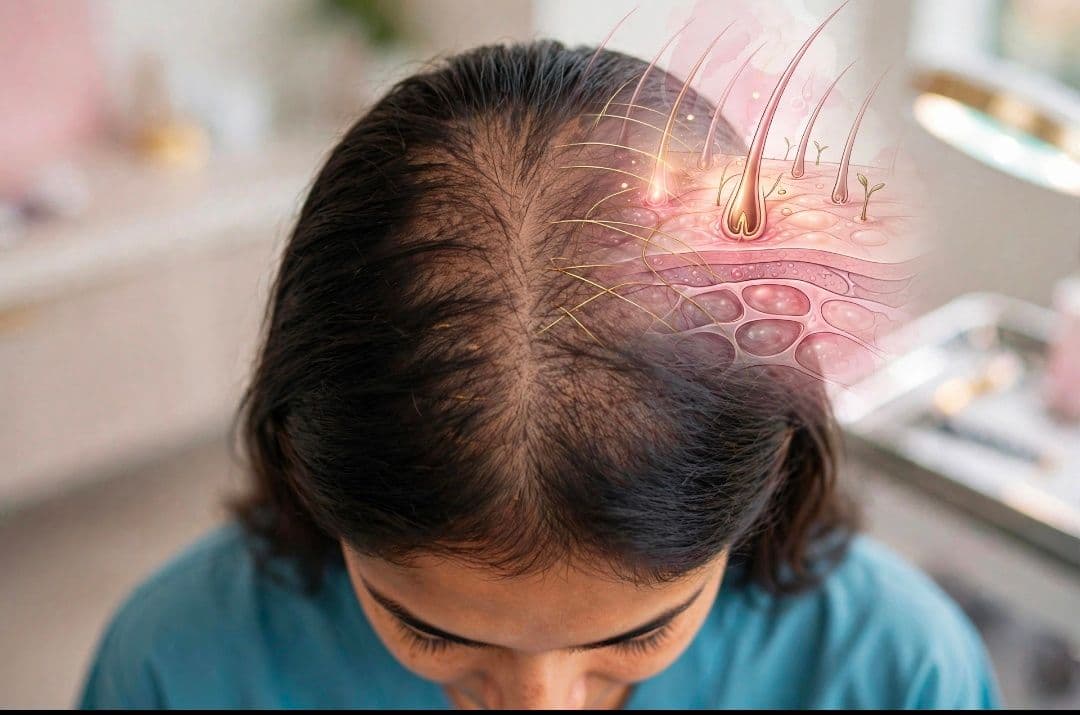
Female Pattern Hair Loss: Can PDO Hair Threads Add a New Dimension to Hair Restoration?
Why Regenerative Combination Therapy May Represent the Future of Modern Trichology Practice
Date
17 June, 2026
Tags
Reading Time
Reading time unavailable
Why Regenerative Combination Therapy May Represent the Future of Modern Trichology Practice
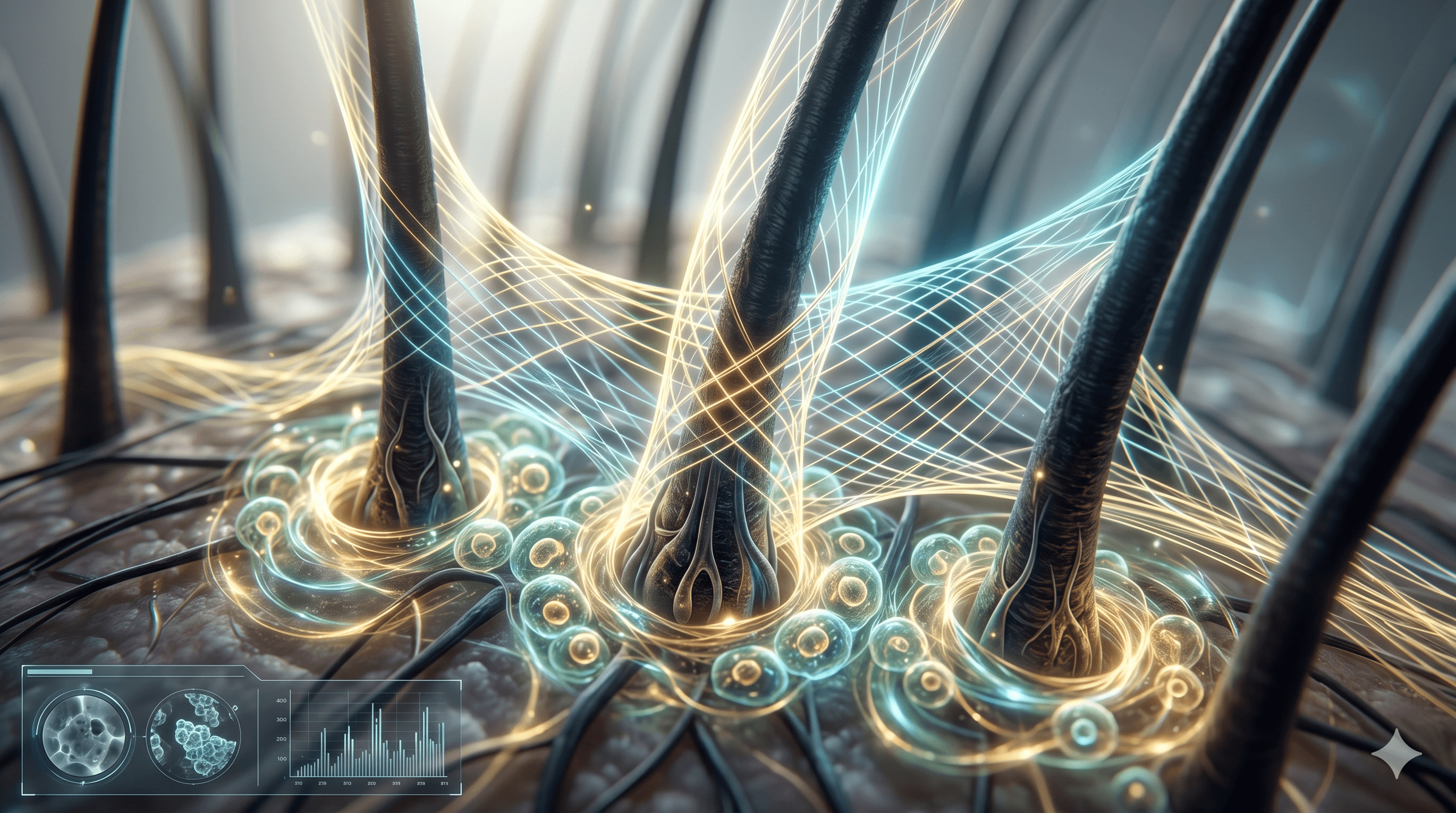


The Shift to Regenerative Follicular Preservation
The modern approach to androgenetic alopecia (AGA) management is undergoing a significant transformation. Traditionally, hair restoration protocols largely focused upon reducing hair fall and slowing progression through pharmacological approaches such as topical Minoxidil, oral Finasteride, nutraceutical supplementation, and platelet-based therapies and PRP and GFC.
While these modalities continue to remain important pillars in trichology practice, an increasing number of dermatologists globally are observing that many patients eventually plateau despite ongoing treatment adherence. This clinical plateau has become particularly evident among younger AGA patients presenting with early crown thinning, diffuse miniaturization, and stress-associated accelerated hair loss. In these patients, reduction in
hair fall alone is often insufficient to meet rising expectations for visible density restoration and long-term follicular sustainability.
Increasingly, clinicians are recognizing that AGA is not solely a hormonal disorder. It is also associated with progressive perifollicular microvascular compromise, inflammatory signaling, extracellular matrix alterations, reduced regenerative activity, and shortening of
the anagen growth phase
Why Early Crown Preservation Matters
One of the most striking epidemiological shifts in modern trichology practice is the increasing prevalence of early-onset AGA among younger urban populations. Lifestyle-associated factors including chronic stress, sleep deprivation, elevated cortisol exposure,
nutritional imbalance, metabolic dysfunction, environmental pollution, smoking, prolonged screen exposure, and psychological burnout are believed to contribute toward accelerated follicular aging and early miniaturization.
Importantly, today’s younger adults remain professionally active and socially visible for significantly longer periods compared to previous generations. Patients in their late 20s and
early 30s are increasingly seeking intervention not because they are bald, but because they fear progressive crown visibility and long-term aesthetic decline. This represents a fundamental shift in treatment philosophy and is a major driver behind global interest in regenerative therapies.
PDO Hair Threads: Biological Rationale
Polydioxanone (PDO) is a biodegradable and biocompatible synthetic polymer that has been extensively utilized in surgery for several decades because of its favorable safety profile and
tissue compatibility. When PDO threads are inserted into the scalp, they create a localized regenerative stimulus within the dermal and subdermal tissue.
According to published literature, the implanted threads may stimulate fibroblast activity, collagen production, elastin formation, neoangiogenesis, and wound-healing cascades. The insertion process creates a controlled micro-inflammatory regenerative response, which may help concentrate growth factors within the scalp environment. Experimental evidence has demonstrated significant improvement in hair density in murine models, and human
observations similarly report reductions in shedding and gradual improvement in density.
Combining PDO Threads with PRP and GFC
One of the most clinically relevant observations emerging from regenerative trichology practice is that PDO threads appear to complement platelet-based therapies rather than compete with them. PRP and GFC primarily function through the delivery of concentrated growth mediators and signaling molecules. PDO threads, on the other hand, may provide a prolonged regenerative scaffold effect within the scalp. While platelet therapies deliver biological signaling, PDO threads help create a localized structural and regenerative microenvironment capable of sustaining healing and biostimulation over a longer period. Understanding the Timing
Currently, there is no universally standardized global protocol, but two approaches are common:
Simultaneous Administration: PDO threads are placed during the same treatment session immediately following PRP or GFC. This theoretically optimizes the local healing cascade while growth mediators are already present.
Staged Protocol: PDO threads are inserted first, followed by PRP or GFC 1–2 weeks later, allowing the initial thread-induced inflammatory phase to create a receptive environment first.
Clinical Case Observations
A published clinical case discussion from Medi Tresse Hair Restoration described a female patient with androgenic alopecia who had previously undergone PRP therapy, Minoxidil, and laser treatment but experienced plateaued outcomes. The patient subsequently underwent combined PDO thread therapy with platelet concentration treatment. Within approximately three months, visible improvement in scalp density was observed,
with trichoscopic evaluation demonstrating approximately a 14% increase in hair regrowth parameters. Importantly, the clinic further anticipated continued improvement over the subsequent 6–12 months.
The Post-Procedure Timeline & Precautions
The regenerative response occurs progressively. During the initial 1–2 weeks, the scalp primarily undergoes inflammatory signaling and wound-healing activation. Over the following weeks, collagen remodeling and angiogenic support evolve. Meaningful visible
density improvement often becomes more appreciable between 8–12 weeks. Hair restoration biology is gradual, making expectation management critical.
Post-procedure care involves avoiding vigorous scalp rubbing, heavy exercise, sauna exposure, excessive sweating, and scalp massage during the immediate post-procedure period. However, most patients resume daily activities quickly.
What Modern Patients Seek
Minimally invasive therapy
Regenerative solutions
Visible differentiation
Clinic Operational Goals
Improve treatment retention
Differentiate trichology services
Create premium offerings
Deliver visible engagement
Conclusion
The future of hair restoration is increasingly moving toward integrative regenerative medicine. Rather than relying exclusively upon isolated approaches, modern trichology is exploring multimodal strategies to improve long-term crown preservation. PDO Hair Threads are emerging as a valuable adjunctive scaffold biostimulation therapy that, when
combined with PRP and GFC, represents an exciting frontier in modern AGA management.
Author

Mr Dinesh Deshpande
GM Marketing & Sales
Contact Us
Experience expert care tailored to you. Contact us for a consultation and take the first step toward refined confidence.