

Integrating PDO Hair Threads with PRP & GFC
Why Regenerative Combination Therapy May Represent the Future of Modern Trichology Practice
Date
20 September, 2026
Tags
Reading Time
6
Why Regenerative Combination Therapy May Represent the Future of Modern Trichology Practice
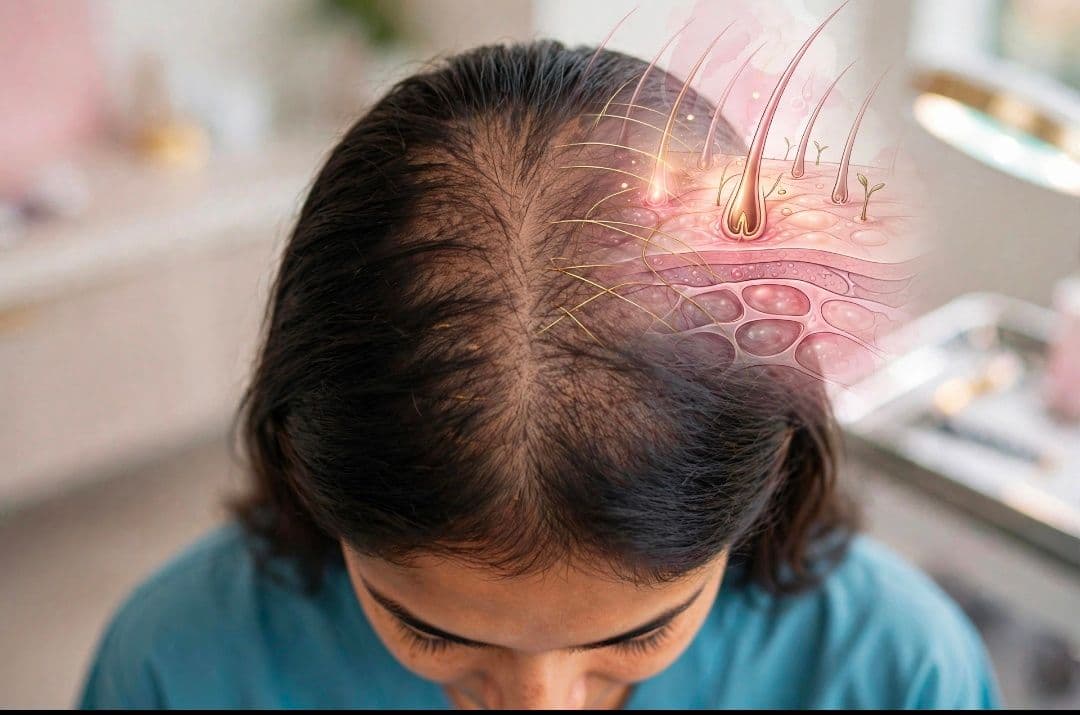


Female pattern hair loss (FPHL), also known as female androgenetic alopecia, is one of the most common causes of progressive, non-scarring hair loss in women. It is characterized primarily by follicular miniaturization and a gradual reduction in hair density, particularly over the frontal, central and parietal scalp.
Unlike typical male-pattern hair loss, the frontal hairline is often relatively preserved in women. However, some women can develop bitemporal or frontotemporal recession, which may significantly alter facial framing and become a major aesthetic concern.
For many women, hair loss is about much more than reduced hair density. A widening central part, increased scalp visibility or a receding frontal-temporal hairline can affect hairstyle choices, appearance, confidence and social interactions.
As patients increasingly seek minimally invasive and patient-friendly approaches to hair restoration, interest has grown in procedural and regenerative therapies that may complement conventional treatment.
One emerging approach is scalp treatment with absorbable monofilament threads, including polydioxanone (PDO) hair threads.
FPHL is not exclusively a condition of older or post-menopausal women.
Indian clinical studies have demonstrated that patterned hair loss can occur during the reproductive years and may create significant cosmetic concerns.
A study from Western India involving 90 women with FPHL reported an age range of 17–65 years, with a mean age of approximately 34.7 years. The most common patterns according to the Basic and Specific (BASP) classification were the M pattern (46.7%), followed by the L pattern (35.6%) and C pattern (17.7%). Importantly, 91.1% of patients had advanced disease at presentation, with bi-temporal recession being a frequent feature among the women studied.
Another Indian study involving women aged 18–45 years with patterned hair loss included patients presenting with hair loss involving the crown, temporal region and hairline recession, demonstrating that patterned hair loss can become clinically significant well before menopause.
At the same time, not every woman presenting with diffuse hair loss has FPHL. In one tertiary-care study of 100 women with nonscarring diffuse hair loss, chronic telogen effluvium accounted for 62% of cases, while FPHL accounted for 22%.
Every woman presenting with hair loss requires appropriate diagnostic evaluation before treatment is selected.
FPHL may coexist with chronic telogen effluvium, nutritional deficiencies, thyroid abnormalities, hyperandrogenic disorders and other causes of hair loss.
Correct diagnosis therefore remains the foundation of effective hair-restoration planning.
The classical presentation of FPHL involves diffuse thinning over the crown and frontal scalp with relative preservation of the frontal hairline.
However, the clinical spectrum is broader.
Some women develop bitemporal or frontotemporal recession, resulting in an apparent increase in forehead width and an alteration of the facial frame.
For a young or middle-aged woman, even a relatively small reduction in frontal-temporal hair density can become disproportionately noticeable.
Patients may describe the problem in very simple terms:
“My forehead looks bigger.”
“My hairline is receding.”
“My parting is getting wider.”
“My scalp is becoming visible.”
“I cannot style my hair the way I used to.”
These concerns make the frontal hairline, frontotemporal region and central parting important areas to consider in aesthetic hair-restoration practice.
The impact of FPHL extends well beyond the scalp.
Women with hair loss may experience reduced self-esteem, anxiety, social discomfort and dissatisfaction with their appearance. Recent research has demonstrated significant disease-related quality-of-life impairment among women with FPHL, with psychosocial burden increasing with the severity of hair loss.
Earlier research has similarly demonstrated that female androgenetic alopecia can affect daily activities, self-esteem and social functioning.
Consequently, treatment success from the patient's perspective may involve more than simply slowing further hair loss.
Patients may seek:
This distinction between clinical stabilization and patient-perceived improvement is important when planning long-term hair-restoration treatment.
The management of FPHL remains centered on evidence-based medical therapy.
Topical minoxidil continues to be an important treatment option, while selected patients may receive systemic therapies or other interventions depending on diagnosis, disease severity, hormonal status, reproductive considerations and physician assessment.
However, hair biology is inherently slow.
Meaningful improvement generally requires several months of treatment, and continued therapy may be necessary to maintain the response.
This creates a practical challenge in private practice.
Patients may understand that hair treatment requires time, yet still expect visible improvement within a reasonable period. When perceived improvement does not match expectations, treatment adherence and long-term satisfaction can become challenging.
This has encouraged interest in procedural approaches that may complement conventional medical management.
Platelet-rich plasma (PRP) has become an increasingly used procedural modality for androgenetic alopecia. Growth-factor-based approaches such as GFC are also being incorporated into contemporary hair-restoration practices.
These approaches may provide clinically meaningful improvement in selected patients, although outcomes can vary according to:
Repeated procedural sessions also represent an investment of time and cost for the patient.
Consequently, there remains interest in adjunctive approaches that can potentially complement medical and regenerative therapies.
Polydioxanone (PDO) is an absorbable synthetic polymer that has been widely used in surgical sutures and aesthetic thread procedures.
The concept of using absorbable monofilament threads in the scalp is based on the observation that thread implantation can generate a localized tissue response and connective-tissue remodelling.
A 2017 publication by Bharti et al. reported the use of PDO monofilament scalp threading in patients with androgenetic alopecia. The study reported increases in hair counts and photographic improvement at approximately 12 weeks following treatment.
Although the initial study was small, it introduced an interesting concept:
Can controlled implantation of absorbable monofilament threads create a local tissue environment that may support hair growth?
Subsequent research has provided additional clinical evidence, including studies specifically evaluating women with female androgenetic alopecia.
One of the most relevant studies evaluated monofilament thread therapy specifically in women with female androgenetic alopecia.
This double-blind, multicentre, placebo-controlled pilot study assessed:
The investigators reported statistically significant differences in hair count and/or hair mass index between the treatment and placebo groups.
Patient-reported outcomes were also notable.
In the treatment group:
Important interpretation: The 76.8% figure represents a patient-reported improvement in hair feel/coarseness. It should not be interpreted as a 76.8% hair-regrowth rate.
This distinction is important when communicating clinical evidence to patients.
An important question is whether PDO hair threads should be considered an alternative to established medical therapy.
Current evidence supports a more cautious interpretation.
A randomized half-scalp study involving 27 women evaluated monofilament thread therapy combined with minoxidil versus minoxidil alone.
Mean hair density increased from approximately 114 to 143 hairs/cm² in the combined-treatment group, compared with approximately 113 to 123 hairs/cm² in the minoxidil group.
Global photographic improvement was reported in 93% of patients in the combination group, compared with 52% in the minoxidil-only group.
These findings suggest that thread therapy may have potential as an adjunct to medical treatment.
However, larger studies are required before combination treatment can be considered a standardized superior protocol.
The precise biological mechanism through which PDO threads may influence hair growth remains incompletely established.
Several mechanisms have been proposed.
Insertion of a monofilament thread produces a controlled local tissue response.
The body recognizes the implanted absorbable material and initiates a healing and tissue-remodelling process around it.
PDO implantation has been associated with fibroblast activity and connective-tissue remodelling.
The local tissue response may contribute to collagen deposition and subsequent tissue remodelling around the implanted thread.
Thread implantation may also produce a local vascular response.
This is of interest from a hair-biology perspective because hair follicles depend on their surrounding dermal microenvironment and vascular support.
However, the extent to which PDO-induced vascular changes directly translate into clinically meaningful follicular regeneration remains an area requiring further research.
The tissue response generated around an implanted thread may involve signalling molecules and growth factors associated with wound healing and tissue regeneration.
Because follicular cycling is regulated by complex interactions involving epithelial cells, dermal papilla cells, extracellular matrix and multiple signalling pathways, local tissue stimulation represents a biologically plausible mechanism for influencing the environment surrounding miniaturized follicles.
These mechanisms should currently be regarded as proposed biological explanations rather than definitively established mechanisms of hair regeneration.
The central pathological feature of FPHL is progressive follicular miniaturization, resulting in reduced terminal hair calibre and density.
Therefore, the objective of a regenerative hair-restoration strategy is not simply to place a material into the scalp.
The objective is to potentially influence the environment surrounding follicles that remain biologically viable.
This makes patient selection critical.
PDO scalp threading is more logically positioned as an adjunctive option in areas where viable or miniaturized follicles are present rather than as a treatment for completely scarred or permanently destroyed follicles.
The development of dedicated hair-restoration threads has allowed the concept of monofilament threading to be adapted specifically for scalp applications.
Bio Meyisun PDO Hair Threads are designed for hair-restoration applications using a 12-mm needle with a 15-mm PDO thread.
The relatively short needle is designed to facilitate controlled placement within the scalp treatment area.
The procedure involves introducing the thread into the appropriate superficial scalp plane, with attention to controlled depth and spacing.
As with any minimally invasive procedure, appropriate aseptic technique, patient selection and adherence to the manufacturer's instructions for use are essential.
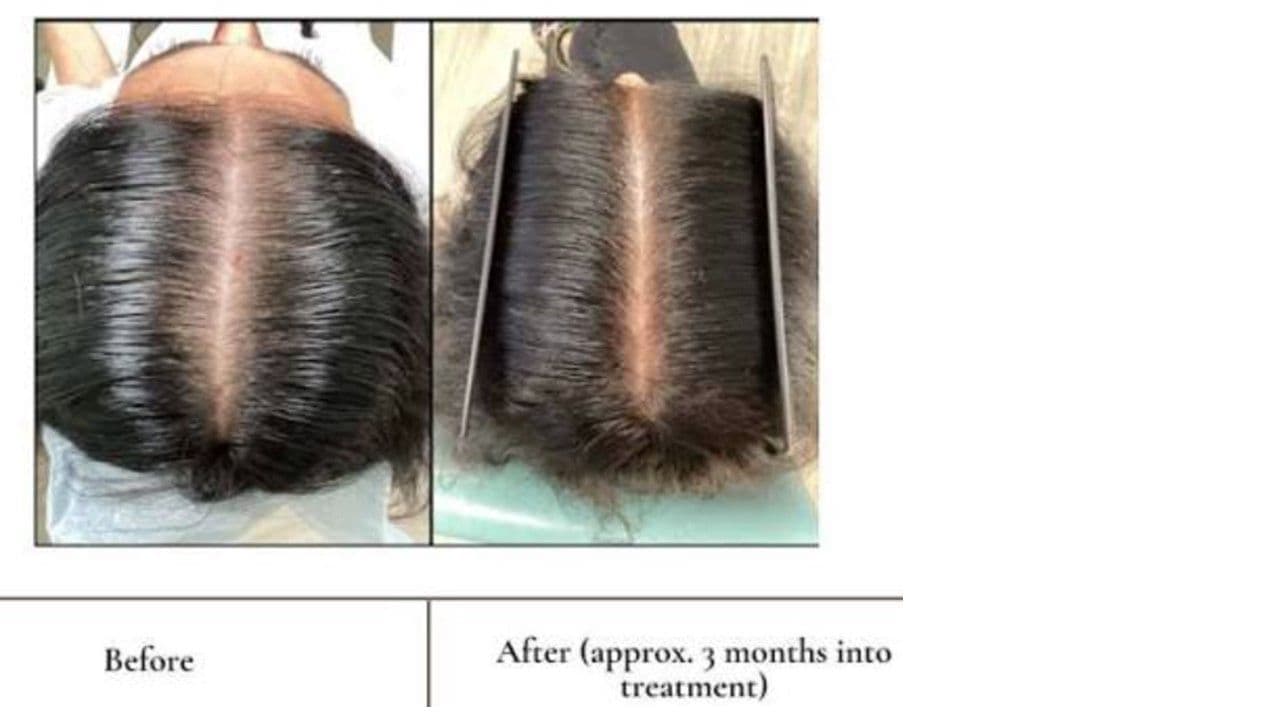
A structured treatment approach can help standardize the procedure.
The area of greatest hair deficit can first be mapped and documented.
A practical grid-based approach may use approximately 1 cm × 1 cm spacing, with individual threads placed within the selected treatment zone.
This creates a distributed pattern of local stimulation across the area of concern.
Depending on the extent of the deficit, approximately 30–50 threads may be used for a localized treatment area, while larger numbers may be required for more extensive scalp involvement.
The number of threads should always be individualized according to:
For extensive disease, particularly advanced patterned hair loss, treatment may be planned in stages rather than attempting to treat the entire scalp in a single session.
An important consideration in aesthetic hair-restoration practice is identifying the patient's highest-priority cosmetic concern.
If scalp visibility is most pronounced along the central parting, treatment can initially focus on this region.
If the principal concern is a receding hairline or increased forehead width, the frontotemporal region can become the primary treatment zone.
For patients with greater vertex involvement, the crown can be prioritized.
A targeted approach also makes it easier to objectively assess the treated area using standardized photography and trichoscopy.
Once improvement is documented, additional areas can subsequently be considered when clinically appropriate.
The integration of trichoscopy can significantly strengthen the clinical evaluation of hair-thread therapy.
Baseline assessment can include:
Follow-up assessment should ideally evaluate the same predefined treatment area.
This allows the physician to move beyond a purely subjective assessment such as:
“Your hair looks better.”
towards a more objective assessment:
“The treated area demonstrates measurable changes in hair density and/or calibre compared with baseline.”
For a procedure that is still evolving scientifically, objective documentation is particularly valuable.
PDO hair-thread therapy does not necessarily need to be considered a replacement for existing hair-restoration modalities.
Depending on the individual patient's diagnosis and treatment plan, physicians may continue appropriate medical therapy and may consider PRP or other regenerative procedures as adjunctive treatments.
The rationale for multimodal treatment is that different modalities may potentially influence different aspects of the follicular microenvironment.
However, robust evidence specifically evaluating PDO threads combined with PRP or GFC versus either treatment alone remains limited.
Therefore, combination treatment should be individualized and based on clinical judgement rather than presented as an established superior protocol.
One of the practical attractions of monofilament scalp threading is that it is a minimally invasive procedure that can generally be performed in an outpatient setting.
Published scalp-threading studies have reported relatively limited post-procedure effects, although temporary discomfort, swelling or other local reactions can occur.
Patient comfort can depend on:
Topical numbing may be adequate for many patients, although the need for anaesthesia should be determined individually by the treating physician.
PDO scalp threading may be considered as an adjunctive option in appropriately diagnosed patients with:
Before initiating treatment, the physician should establish the diagnosis and consider relevant differential diagnoses.
This is particularly important in women because diffuse hair loss may result from:
Diagnosis should always precede procedure selection.
The evolution of hair restoration is increasingly moving towards individualized, multimodal treatment.
A comprehensive approach may involve:
Accurate diagnosis
↓
Identification and correction of underlying contributors
↓
Evidence-based medical therapy
↓
Regenerative/procedural stimulation where appropriate
↓
Objective trichoscopic monitoring
↓
Long-term maintenance
Within this framework, PDO scalp threading represents an emerging procedural option that may complement conventional hair-restoration approaches.
Published evidence in women is encouraging, particularly regarding improvements in hair count, hair mass index and patient-reported hair characteristics.
Early PDO-specific clinical evidence has also reported improvements in hair counts and photographic outcomes following scalp threading.
However, larger and longer-term clinical studies are still required to establish standardized protocols, durability of response and comparative effectiveness.
Female pattern hair loss is more than a reduction in hair density.
For many women, particularly those in their younger and middle years, central scalp visibility, widening of the parting and frontal-temporal recession can have a disproportionate impact on appearance and quality of life.
Conventional medical therapy remains the foundation of management. However, the slow biological cycle of hair growth and the need for ongoing treatment can make patient expectations and long-term satisfaction challenging.
PRP and other regenerative approaches have expanded the procedural options available to hair-restoration physicians, although treatment response can vary between patients.
PDO monofilament scalp threading introduces another potential tool into this evolving therapeutic landscape.
By producing a localized tissue response and potentially supporting a favourable follicular microenvironment, PDO threads represent an interesting minimally invasive approach for appropriately selected patients.
Clinical studies of monofilament thread therapy in women have demonstrated improvements in hair count and hair mass index, together with favourable patient-reported outcomes. Early PDO-specific evidence has similarly reported encouraging changes in hair counts and photographic assessment following treatment.
The role of PDO hair threads should therefore be viewed as an emerging adjunctive modality in hair restoration—not as a replacement for established medical therapy.
For dermatologists, trichologists and aesthetic physicians, the opportunity lies in integrating:
Accurate diagnosis + medical management + trichoscopic monitoring + appropriately selected procedural interventions
to create a more comprehensive approach to female hair restoration.
The future of trichology may not be about choosing a single treatment.
It may be about selecting the appropriate combination of evidence-based interventions for the appropriate patient and stage of follicular miniaturization.
PDO hair threads are absorbable monofilament threads made from polydioxanone that are placed into the scalp as a minimally invasive procedural approach. Their proposed role is to create a localized tissue response that may support the follicular microenvironment.
Clinical research has reported improvements in hair count, hair mass index and patient-reported hair characteristics following monofilament thread treatment. However, PDO hair threads should currently be considered an adjunctive treatment option rather than a replacement for established medical treatment.
No. Correct diagnosis is essential. Women can experience hair loss due to multiple causes, including telogen effluvium, nutritional deficiencies, thyroid disorders, alopecia areata and frontal fibrosing alopecia. A dermatologist or qualified hair-restoration physician should establish the diagnosis before considering the procedure.
Published research has evaluated monofilament thread therapy in combination with minoxidil and reported improvements in hair density and photographic assessment compared with minoxidil alone. However, treatment combinations should be individualized by the treating physician.
PRP and other regenerative approaches may be considered as part of a multimodal treatment plan. However, robust evidence specifically evaluating PDO threads combined with PRP or GFC versus individual treatments remains limited.
Standardized clinical photography and trichoscopy can be used to assess changes in hair density, hair calibre and follicular miniaturization over time.
PDO hair threads and hair transplantation address hair restoration through different approaches. PDO threading is an emerging minimally invasive adjunctive modality, whereas transplantation involves surgical relocation of hair follicles. The appropriate option depends on diagnosis, donor availability, degree of follicular miniaturization and individual treatment goals.
Author

Mr Dinesh Deshpande
GM Marketing & Sales
Contact Us
Experience expert care tailored to you. Contact us for a consultation and take the first step toward refined confidence.